Don’t miss an episode of our podcast, Personal Finance for Long-Term Investors. Available on all podcast players.
Here’s the latest episode:
Keith wrote in and asked:
Do you recommend treating social security income as part of your bond allocation by doing a present value calculation and apply that figure toward bond allocation?
My current allocation is 70/30 but with the recent in flux of cash flow from SS, I’m considering bumping that up to 90% stocks and 10% bonds.
What do you think?
Cool question Keith. Thanks for writing in.
I’ve written about the “Social Security as a lump-sum bond” trick before. It’s a good exercise. An income stream can be thought of as an equivalent bond-lump-sum figure.
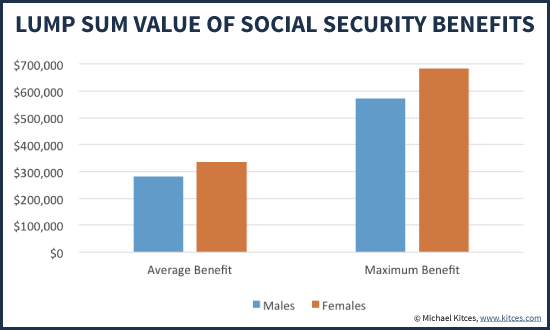
But I’d push back gently on using that number to directly offset your bond allocation and free up room for more stocks.
Here’s why: that lump-sum math answers “what would it cost to buy this income stream?”
BUT (!!!)…when push comes to shove, Social Security is not a lump sum. It’s not an asset sitting on your balance sheet. You can’t rebalance it, sell it, or spend it as a chunk.
The Better Way
It’s much better to view this conversation through asset-liability matching. Which is to say, your portfolio’s real job is to fund whatever spending Social Security doesn’t cover. That’s the remaining liability. And based on details that Keith sent me, his liability is small: only 20% of his living expenses.
So the right question is not “how much bigger is my effective bond allocation once I add in a Social Security lump sum?”
Instead, it’s “what do my remaining cashflow liabilities look like, year by year, and what assets should I own to cover those future liabilities?”
If Keith has 20% annual cashflow gap, he doesn’t need too much bond exposure to cover that gap for 6, 8, 10 years. The rest of his portfolio, in theory, could sit further out on the timeline and tolerate more stock exposure.
This still might get him to the same 90/10 conclusion!
But it’s a very different (and more defensible) logical path than, “Social Security = $X in bonds, so let’s shrink the bond bucket.”
Keith’s same conclusion might be reasonable, but the reasoning should come from sizing your actual future liability, not from treating Social Security as an asset.
Thank you for reading! Here are three quick notes for you:
First – If you enjoyed this article, join 1000’s of subscribers who read Jesse’s free weekly email, where he send you links to the smartest financial content I find online every week. 100% free, unsubscribe anytime.
Second – Jesse’s podcast “Personal Finance for Long-Term Investors” has grown ~10x over the past couple years, now helping ~20,000 people per month. Tune in and check it out.
Last – Jesse works full-time for a fiduciary wealth management firm in Upstate NY. Jesse and his colleagues help families solve the expensive problems he writes and podcasts about. Schedule a free call with Jesse to see if you’re a good fit for his practice.
We’ll talk to you soon!