Don’t miss an episode of our podcast, Personal Finance for Long-Term Investors. Available on all podcast players.
Here’s the latest episode:
Keith wrote in and asked:
Do you recommend treating social security income as part of your bond allocation by doing a present value calculation and apply that figure toward bond allocation?
My current allocation is 70/30 but with the recent in flux of cash flow from SS, I’m considering bumping that up to 90% stocks and 10% bonds.
What do you think?
Cool question Keith. Thanks for writing in.
I’ve written about the “Social Security as a lump-sum bond” trick before. It’s a good exercise. An income stream can be thought of as an equivalent bond-lump-sum figure.
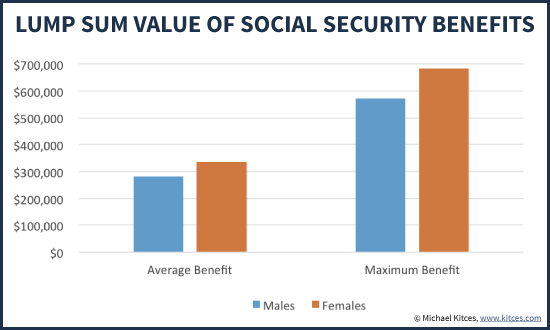
But I’d push back gently on using that number to directly offset your bond allocation and free up room for more stocks.
Here’s why: that lump-sum math answers “what would it cost to buy this income stream?”
BUT (!!!)…when push comes to shove, Social Security is not a lump sum. It’s not an asset sitting on your balance sheet. You can’t rebalance it, sell it, or spend it as a chunk.
The Better Way
It’s much better to view this conversation through asset-liability matching. Which is to say, your portfolio’s real job is to fund whatever spending Social Security doesn’t cover. That’s the remaining liability. And based on details that Keith sent me, his liability is small: only 20% of his living expenses.
So the right question is not “how much bigger is my effective bond allocation once I add in a Social Security lump sum?”
Instead, it’s “what do my remaining cashflow liabilities look like, year by year, and what assets should I own to cover those future liabilities?”
If Keith has 20% annual cashflow gap, he doesn’t need too much bond exposure to cover that gap for 6, 8, 10 years. The rest of his portfolio, in theory, could sit further out on the timeline and tolerate more stock exposure.
This still might get him to the same 90/10 conclusion!
But it’s a very different (and more defensible) logical path than, “Social Security = $X in bonds, so let’s shrink the bond bucket.”
Keith’s same conclusion might be reasonable, but the reasoning should come from sizing your actual future liability, not from treating Social Security as an asset.
Thank you for reading! Here are three quick notes for you:
First – If you enjoyed this article, join 1000’s of subscribers who read Jesse’s free weekly email, where he send you links to the smartest financial content I find online every week. 100% free, unsubscribe anytime.
Second – Jesse’s podcast “Personal Finance for Long-Term Investors” has grown ~10x over the past couple years, now helping ~20,000 people per month. Tune in and check it out.
Last – Jesse works full-time for a fiduciary wealth management firm in Upstate NY. Jesse and his colleagues help families solve the expensive problems he writes and podcasts about. Schedule a free call with Jesse to see if you’re a good fit for his practice.
We’ll talk to you soon!
1) I love the exercise of treating SS as a bond lump some and solving for the present value or SS. BUT, that exercise omits a harder to quantify item which is macro risk + personal risk tolerance. It also omits spending (how much is discretionary vs essential) and it omits age based options.
2). Imagine a portfolio that is 95% stock, 5% cash….volitile right? Can be way up, way down, averages out up but there are some major bumps in the road and 5% cash wont always see you past those big bumps.
Now enter bonds….why do we like bonds when they return less thank stocks? They throw off income when stocks are down and out for prolonged periods, and often increase in value as well when stocks are down. So we shift to a 70% stock, 28% bond, 2% cash equivilant portfolio. Returns are a little lower but A LOT smooter in terms of bumps. You sleep better, have less stress and the risk of a heart attack fueled by anxiety is lower lol (which by the way…IS also very expensive).
One thing to note….risk is STILL there. There are MULTIPLE macro risks to guard for….the one we always think of is a lost decade. 2000-2012 (inflation adjusted SP500 highs took over 12 years to recover from the dotcom bust)….you would have been very happy to have 30% bonds then. In that SAME period (2000-2012) when stocks had an inflation adjusted return of 0, 10 year treasury yeild had a return of 4.45%. Then there is 1968-77, SP500 had a return of -2%. 10 Year Treasury: -1%. Would you be happy to have -1% over a decade…of course not….BUT you would have still done better than stocks AND you would have had FAR few crashes where your portfolio dropped over 2% in a single month.
Can we do better than Stocks/Bonds/a little cash equivilant?…yes….enter an annuity shelled out by the federal government, SSI. SSI in this lost decades helps immensely….it pays out regardless of the stock or bond market (which is why I believe most people should hold on SS if their health is average to good or they are married). So what gives…if there is less risk with a stock/bond/cash portfolio AND SSI…why can’t you up your equity? This is were it gets a little muddy. You could likely up your equity portion a little…a 20% jump…thats SIGNIFICANT though. HOW MUCH you COULD increase by…should be a reflection of how much SSI will cover ou ESSENTIAL spending, spending you CAN’T reduce. Personally, I would ALSO…. factor in a portion of discretionary as non-negociable. No one EVER 100% cuts out the grand kids birthday or Christmas presents, or doesn’t go out for a meal to celebrate a 40th or 50th wedding anniversary. Keep at LEAST 30-60% of discretionary as non-negociable.
NOW…with your essential spend + 45% (averaging 30+60%) of discretionary spend…..how long could you go without selling your stocks in a lost decade? Would 10% of bonds get you through it mostly? NOT JUST to the bottom, but also BACK to inflation adjusted all time highs?
Last, you could MAYBE go for 30% discretionary + essential spend if you and your spouse have health AND WOULD BE WILLING to do additional things for income in a prolonged down turn….could you and WOULD YOU consult, teach a class, pick up 10 hours a week at the local grocery or hardware store to preserve your down equity portion? Could you / WOULD YOU rent out a spare bedroom or rent your second car on Toro? Could you or WOULD you become a travel credit card / new bank account optimizer for extra income? Also, factor in how many years COULD you / WOULD you do this before health or care obligations for a spouse would prevent this (then reduce 2 more years from your best guess).
I’ll be honest, could you do 90/10…sure…especially if you have a rather large SS payment and low essential expenses….would most recommend it…..probably no…is it worth the stress in your golden years? Can you enjoy retirement as much if you total portfolio is down 36% when it could have been down 25% Is it worth it? The historic, 100 year, inflation adjusted return s for a 70/30 is 6.11%, a 90% is 7.03%. You don’t even pick up a full percentage point. Sure, you have more money to leave your heirs most likely…but you drastically increase the odds of having less money to enjoy when your health is at its best.
Also, the timing of this sort of move. My crystal ball is broken…markets could go up or down…I dont know…but the Schiller CAPE (when measure income to price of the SP500) is very high so likelihood of a pull back is higher. How would you feel if you make this move to 90/10 and markets drop in 2028? Could you hold on….or would you feel the urge to preserve and revert to a 70/30 and lock in losses? The older we get…the HIGHER the odds you WANT to preserve more.
Lastly…..could you compromise? Figure out your essential expenses + some percentage of descretionary…and say “ok self….THIS level of bonds could last 5-10 years)…I will bet it is no where near 10%…likely closer to 20-30%…might even be higher, 30-40%. THEN make a deal…next time markets are below thier all time high by at least 15% for a year…you can “risk up”. Why a year?….1) you COULD be in a very different mental state then and 2) at least you wont be buying high and risking selling lower (could markets continue to shoot up 1..2..3..more years before this pull back…sure….but finance professionals and strong investors manage risk, NOT returns).
Great summary of asset-liability matching.