Don’t miss an episode of our podcast, Personal Finance for Long-Term Investors. Available on all podcast players.
Here’s the latest episode:
A reader wrote in to me last week explaining his DIY retirement plan.
His plan involved Roth conversions. No problem so far.
Roth conversions create taxes. Indeed, unavoidable.
And his plan was to pay those taxes via withholding dollars from the Roth conversion.
Hold up!

Withholding and Roth Conversions
Withholding tax is money that an employer (or other payer) deducts from your income and sends directly to the IRS. It’s a preemptive payment toward your annual income tax. Most of us are familiar with withholding in our normal W2 paychecks.
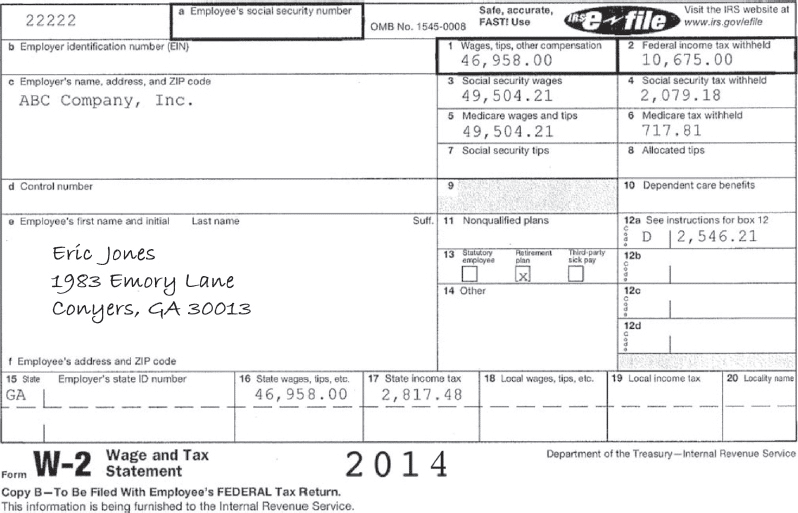
In the case of Roth conversions, withholding is money that your custodian (Schwab, Fidelity, etc.) deducts from the conversion amount and sends directly to the IRS.
Rather than 100% of your dollars ending up in your Roth account, you get 100% minus your tax rate.
By electing this withholding choice, you are using qualified Roth IRA dollars to pay your taxes. That could probably be the end of the article right there.
Would you rather pay your taxes using regular bank dollars? Or using Roth IRA dollars? It’s a clear choice.

But numbers will help us clarify further.
Two Simple Roth Conversion Scenarios
Let’s say you convert $10,000 in the 12% Federal bracket. You also have a normal bank account with $50,000 in it.
Scenario 1: You withhold your taxes from the conversion.
You convert the $10,000. You withhold $1200. Only $8800 ends up in Roth.
You still have $50,000 in the bank.
Scenario 2: You use bank dollars to pay the tax bill.
You convert the $10,000. All $10,000 ends up in your Roth.
You now have $48,800 in the bank.
The Difference is Clear
There’s a $1200 difference between the scenarios.
That $1200 either ends up in your bank account or in your Roth IRA.
I know which one I’d prefer, and it’s not even close. It’s the Roth!

Are you 59 Yet? Because It Gets Worse…
If you’re younger than 59.5, then today’s idea is even worse for you.
Early withdrawals from IRAs and 401ks typically come with a 10% penalty tax.
Roth conversions are not considered an early withdrawal. Roth conversions are safe.
BUT…if you withhold taxes from your Roth conversion, then that withheld portion is not considered a conversion. It’s considered a distribution. An early distribution. Subject to a 10% penalty.
You owe extra taxes on the money you withheld to pay taxes. It’s taxes all the way down.

You do not want to do this.
What To Do Instead
When you make a Roth conversion, you’ll want to pay the tax bill using non-qualified dollars, such as those found in your bank account or taxable brokerage account. Though ideally, you aren’t realizing capital gains in your taxable account to pay your Roth conversion bill!
You’ll want to make sure that you’re safe-harbored (which is its own complicated explanation)…
Or that you make an intra-year quarterly estimated tax payment to cover your conversion.
Just don’t withhold taxes from your Roth conversions. Please.
Thank you for reading! Here are three quick notes for you:
First – If you enjoyed this article, join 1000’s of subscribers who read Jesse’s free weekly email, where he send you links to the smartest financial content I find online every week. 100% free, unsubscribe anytime.
Second – Jesse’s podcast “Personal Finance for Long-Term Investors” has grown ~10x over the past couple years, now helping ~20,000 people per month. Tune in and check it out.
Last – Jesse works full-time for a fiduciary wealth management firm in Upstate NY. Jesse and his colleagues help families solve the expensive problems he writes and podcasts about. Schedule a free call with Jesse to see if you’re a good fit for his practice.
We’ll talk to you soon!
You’re right. It’s better to withhold taxes from a savings account when you do a Roth conversion. But change the scenario just a little bit. What if this guy wanted to do a $10,000 conversion, but he didn’t have any money in his savings account (or brokerage account). In this case is he better off paying the $1200 out of the converted money, or just skipping the conversion?
Hi James – in that case…my gut instinct is that someone without $1200 in their bank account has a BIGGER problem on their hand than Roth conversion tax optimization 🙂
But, to give you an answer.
My gut reaction and doing some math in my head – I think the conversion would still be better. But not by a lot.
-Cheers,
Jesse
Of course, someone who doesn’t have $1200 in a bank account has a bigger problem but if you are doing Roth conversions over say ten years and basically living on your IRA at the same time, unless you have a ton in a taxable account, you are going to run out of money to pay taxes with taxable money. Virtually all of my expenses, including taxes need to come from my IRA because I have basically liquidated all my taxable money to allow for Roth conversions while keeping my tax bracket reasonable. But I’d still like to get my IRA balance down as much as possible before RMDs so yes, I am paying the taxes with IRA dollars. I have money in my savings account that I live on but where did that money come from? It came from my IRA. If I pay the taxes from their I just have to refill it from my IRA so….
Jesse:
LOVE the podcast. I am 57, a year away from retirement with a large pretax 401(k), and plan to live mostly off my brokerage. In the earliest years, I can pay for smaller conversions from the brokerage, but it will run out in about 8 years. Then I can fit in much larger conversions, but since the brokerage will be empty, I will need to have the taxes withheld. I understand the Roth won’t grow as much, but as you say, it’s the cherry on top and I will likely never touch the Roth in my lifetime. Paying taxes on $1 million of conversions outside the 401(k) just isn’t possible and it is important to me to leave behind as much tax-free assets as possible to my children.