Don’t miss an episode of our podcast, Personal Finance for Long-Term Investors. Available on all podcast players.
Here’s the latest episode:
The Adirondacks are a special place.

Hiking, in particular, is my favorite part of visiting America’s largest park.
The journey up one of the Adirondack “High Peaks” is grueling but rewarding. Sitting on the summit is a beautiful thing. You’ve never had a better peanut butter & jelly sandwich than when gazing out over the High Peaks, with miles of ascent behind you (and miles of descent ahead).
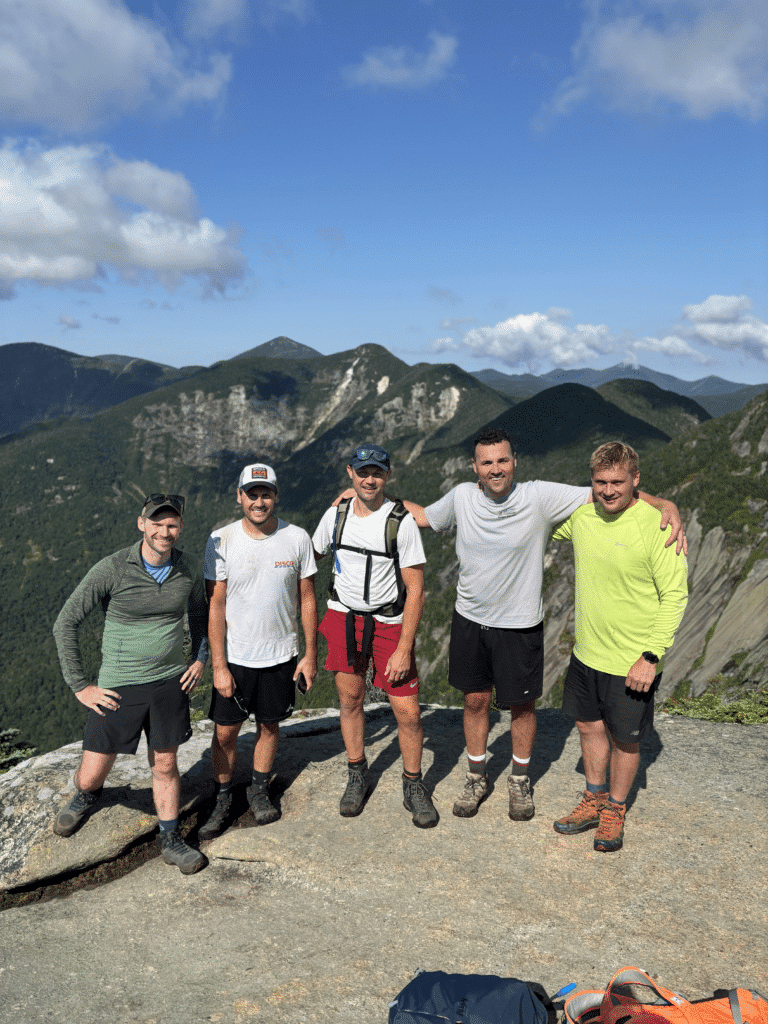
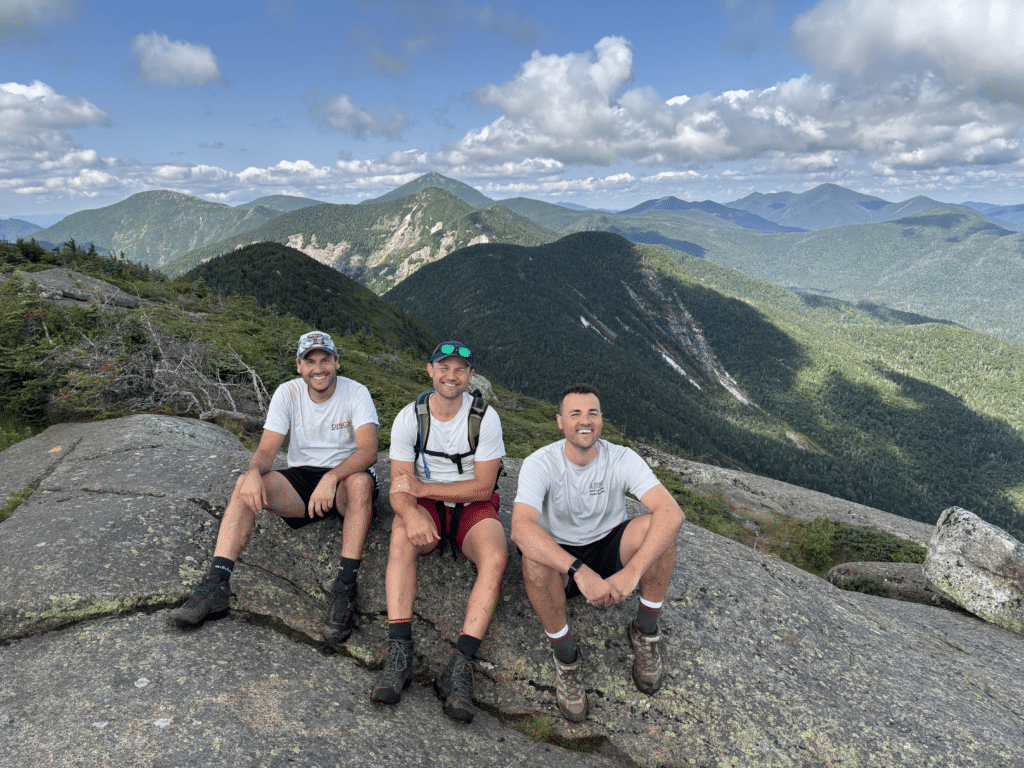
But these hikes aren’t without their risks. Injury, exhaustion, dehydration. Heck – how about the fact that you’re hiking 5+ miles out into the wilderness, where it’s damn hard for anyone to come save you.
And those risks are, in my opinion, 100x more severe in the winter.
- Slips and falls.
- Exposure to the elements (hypothermia, frostbite)
- Navigation errors, losing the trail, and shortened daylight.
- Dehydration, exhaustion, calorie deficit.
- And then, when something bad does happen…isolation and delayed rescue.
Tragedy Strikes
Another Adirondack hiking tragedy occurred this past weekend.
A 21-year old hiker slipped off the trail near the summit of Mount Marcy (the highest peak in New York state). She struggled to find her way back to the trail. It was near zero degrees Fahrenheit.

She called 911 around 3:00pm (and got through to them, which is not guaranteed so far from cell service). Forest Rangers flew a helicopter up to her likely location, but Mount Marcy was “socked in” by cloud cover. They couldn’t see her, and there’s no safe way to land.
So another Ranger set out from “base camp” and hiked ~7 miles up to her location. The ranger located her at 9:50pm.
She had already succumbed to hypothermia.
“Always Get Back to the Car”
Hiker deaths are always sobering reminders for me. Mother Nature is ruthless out there, and it’s not guaranteed that someone can save you. I’ve walked those same trails she walked. There’s a “it could have been me” feeling in the pit of my stomach.
Every time there’s a major rescue, injury, or death in the Adirondacks, I think back to what one of my hiking mentors once told me,
“The most important rule of hiking is, ‘Always get back to the car.’
It sounds pithy. And, after a hiker’s death, perhaps even a little crass. But there’s a lot of power in that simple idea.

With every step a hiker takes, they need to consider…“Am I at risk of not getting back to my car in the hiker parking lot, where the trail starts?“
Sometimes it’s one big thing that goes wrong. You trip on a stick and break your leg. Ok – hard to see that one coming.
Usually, though, it’s many small things that add up and compound negatively. For this young woman’s death last weekend, the details are still coming out.
Please know – this is not Monday-morning quarterbacking. This is learning from a sad cautionary tale. Many fatal accidents involve people who were respectful of nature, yet caught in rapid change or a simple misstep that had serious consequences.
Based on the details we do know:
- She was already disoriented from hypothermia when she called 911 at 3:00pm. The question, then, is…when did she first notice how cold she was feeling? And one of the 10 hiker essentials that you always need to bring is “Extra Clothes – sufficient to survive an emergency overnight.” Did she have enough warm clothes?
- She called 911 at 3:00pm. Sunset was around 5:30pm, and she was still likely 4+ hours from hiking back out. Did she know she’d be running out of daylight?
- She lost the trail – an incredibly easy thing to do above treeline, especially in winter and doubly so when socked in by cloud cover. When did she know she had lost the trail? When leaving the tree line, did she check behind her? Did she have a map and a compass in her pack?
- Speaking of cloud cover…did the weather change on her? Mountain weather can change rapidly. Did the weather change around her, and did she notice it?
- She was by herself (with her dog, who survived). Hiking alone is a risk in and of itself. Hiking alone in winter even moreso. Could a partner or group have helped the situation?
It’s saddening to think that any one of these ideas above might have been enough to prevent her death.
In most hiker accidents, there are many compounding factors that decrease someone’s odds of “getting back to the car.” It basically means, “Sometimes, you must turn around and quit before reaching the summit.”
It’s hard, of course, to commit to a big trip to the mountains, to plan, to take time off work, to hike all day, and then decide to turn around before reaching the summit. Who wants to do that?!

But as soon as you feel that “getting back to the car” might be in jeopardy…well, then you might be violating the #1 (!!!) rule of hiking:
“Always get back to the car.“
Invert. Always Invert.
There’s a reason Charlie Munger’s go-to line was, “Invert. Always invert.”

Life (often) becomes simpler when we turn problems inside-out and solve them that way. Munger would say,
“All I want to know is where I’m going to die, so I’ll never go there.”
Ask yourself:
- What are the worst things that could happen?
- What would cause those worst things to happen?
- How do you prevent or negate those causes from taking place?
“Always get back to your car” is a shorthand for this inversion principle, applied to hiking. In one simple statement, we’re forced to think about what could prevent us from returning home and what we must do to avoid a negative outcome.
You’ve Won. Stop Playing.
The investing corollaries that come to my mind are Bill Bernstein’s all-timer:
“If you’ve won the game, it’s ok to stop playing.”

And one of Buffett’s lesser-known, but still powerful, quotes:
“Why risk what you have and need for what you don’t have and don’t need?“
In retirement planning, these ideas can our guiding stars.
If your portfolio is bigger than you could possibly spend, do you still need extra exposure to risk?
If the dollars you have are vital to your retirement success, why expose them to any more risk than is necessary?
Would you rather have:
- A perfectly boring investment path that ensures you live the retirement you want? Or…
- A volatile investment path that might 10x your portfolio before death, or might make you bankrupt by age 70?
These aren’t trick questions.
You know your goals. You’ve identified what might lead to failure. Sometimes, the risk is too big and far outweighs any rewards.
Always get back to your car.
Thank you for reading! Here are three quick notes for you:
First – If you enjoyed this article, join 1000’s of subscribers who read Jesse’s free weekly email, where he send you links to the smartest financial content I find online every week. 100% free, unsubscribe anytime.
Second – Jesse’s podcast “Personal Finance for Long-Term Investors” has grown ~10x over the past couple years, now helping ~20,000 people per month. Tune in and check it out.
Last – Jesse works full-time for a fiduciary wealth management firm in Upstate NY. Jesse and his colleagues help families solve the expensive problems he writes and podcasts about. Schedule a free call with Jesse to see if you’re a good fit for his practice.
We’ll talk to you soon!
So sad. I see these cases.
Excellent article, yet again… I have come to look forward to your insightful articles each and every week. Additionally, kudo’s on your most recent interview with Marriage, Kids and Money with Andy Hill..
While I have been a listener of your podcast for some time now, I actually really enjoyed you being interviewed with the “tables turned” in a sense. Specifically, your recognition of “Coast FI” and how you have been navigating that thoughtfully..
Keep up the great work….. there are many out there who read, listen and learn from you and we greatly appreciate it.
Jonathan
Many, many thanks Jonathan! I’ll keep creating as long as folks like you continue enjoying it. Thank you for the support!
So glad you enjoyed my appearance on MKM (linking it here for others…https://www.youtube.com/watch?v=NTcYHvQN0AA)
Great article Jesse.
The key Rule #1 ALWAYS GET BACK TO THE CAR.
I read a great book “Death in Big Bend” (living in Texas) and so many situations start with small mistakes, then heat exhaustion or hypothermia amplify irrational continued decisions, and finally, weather surprises led to fatalities.
Nice analogy to portfolio risk. I have continued to nudge my allocation away from risk partly due to Munger’s wisdom. Keep the great writing coming, your postings are cheerful surprises.
Good call, Paul. Heat issues are another one.
Weird story…a young colleague (he was ~23, I was ~28) of mine from my engineering days died from heat exhaustion while hiking the Grand Canyon.
Similar story to this Adirondack death, in so far as a many small mistakes compounded into the ultimate sad price.
Jesse,
If you won the game, stop playing…Hmm.
I’m not sure it’s an easy question to answer.
Asking your opinion…
I am starting a the “3-year retirement with a portfolio where I feel I can cover retirement expenses (and flex if needed) using a SWR of ~3-5% with a fairly good asset location diversity (i.e., tax diversity/flexibility) and the following allocation:
US Large Cap (mostly index) = 50%
Total International Developed/Emerging (mostly index) = 12.5%
US Small Cap (index)= 12.5%
REIT index = 5%
Bond index (generally equal across Sh/Interm Treasury/Corporate) = 10%
Treasury Bill/Cash funds = 10%.
Am I still playing the game at 80/20 and shouldn’t (i.e., moved to less equity; e.g., 50/50)? Or am I still play the game game and ok to do so (stay around 75-80/25-30)?
Oops…sorry for the typos..
…starting a 30-year…
Hey Andy – ok, here goes a high level answer for ya…
If you’re using a 3% withdrawal rate, then I’d venture an 80/20 portfolio is certainly more risky than you need. There’s definitely a “you’ve won, stop playing” aspect to that portfolio.
But at a 5% withdrawal rate, you’re facing an interesting double-edged sword…
Because on one hand, the 80/20 allocation is likely providing more potential upside to ensure you can consistenyl maintain your 5% withdrawal rate. The highs are higher.
But on the other hand, the 80/20 allocation exposes you to more sequence risk. The lows are lower.
Slightly pivoting away…a decent heuristic I’ve recently started using to help evaluate retirement plans / portfolios is that “sequence risk is more severe in the first 6 years of retirement and then quickly falls off after that.”
So – I want to make sure that *at least* those first 6 years of retirement are safely funded and minimizing my exposure to sequence risk.
At a 5% withdrawal rate, that’d point you toward ~30% bond allocation to cover those years.
Hi Jesse,
I very much appreciate your responding and guidance.
For the 5% SWR case, I see your point to raise the bond allocation to, say 30%, to get to that more comfortable level to cover six years (30% @ 5% SWR = 6yr coverage) and protect against SORR.
But for the 3% case, it seems that at the 20% bond allocation I would have 6+ years covered. Therein lies the rub. Stop playing the game and going more conservative has me move to 10, ~13, or nearly 17 years of SORR protection at 30, 40, 50% bonds, respectively. That seems like it’s too conservative and leaves so much on the table.
Only having to draw 3% to live comfortably is a good problem to have. And to stop playing the game does makes sense, but it also has me scratching my head at what opportunity cost.
Maybe the compromise is to go to ~70/30 for 6 years and then implement an upward glide path to 80/20 as social security benefit (another bond-like component to factor in) will be started somewhere within those first 3 to 6 year — depending on market conditions and planned Roth conversions are completed? What a puzzle to solve, no wonder your like this stuff so much ;).
Thanks again.