Don’t miss an episode of our podcast, Personal Finance for Long-Term Investors. Available on all podcast players.
Here’s the latest episode:
Small change, giant impact.
One challenge in financial planning is that “small” decisions can create much bigger impacts than we assume.
“End of Plan” is one such decision. Some planning software might call it “planning horizon” or “life expectancy” or any number of other euphemisms for “when might you die?”
Yes, death is scary to consider.
And it’s obvious how our lifespan affects our finances. The longer we live, the more money we need to live a successful retirement.
But there’s so much more! If you’ve ever dabbled with financial planning software (Boldin, Pralana, eMoney, RightCapital, Empower, etc.), you might be unaware of the unintended side effects that “age at death” is creating in your plan.

Defining the “Problem”…
The (frequent) “problem” I witness follows this logic:
- Running out of money is a scary idea.
- I don’t want to underestimate when we’ll die.
- I’ll overestimate instead…I’ll live until 90. My wife, 95.
- Boom. I’ve “solved” the problem of running out of money.
- [Narrator: But they were completely unaware of the unintended side effects…]
I agree that it’s important to “stress test” whether you’ll run out of money. Changing your assumed age of death is a good idea.
But what else are people missing?
Let’s dive into what people often miss.

Side Effect 1: Social Security Claiming
Extending your End of Plan to age ~85+ almost assuredly pushes your Social Security claiming strategy out to age 70. If you live a long time, you wouldn’t want to claim Social Security early.
This one is straightforward. In fact, it might be less of an “unintended side effect” and more of a “known headliner.”
Plenty of couples should be claiming Social Security before 70 — at least for one of the two spouses.
But if you model your End of Plans out at 85, 90, etc., then the planning software might encourage you both to delay until age 70.

Side Effect 2: Roth Conversions
Roth conversions are tricky. Decades of unknowns lie ahead, and you need to account for them in today’s Roth conversion math. It’s a gray area.
Nevertheless, what’s the effect of assuming someone lives until age 95?
The main effect is that said person would have 20+ years of required minimum distributions, the last of which would be more than 10% of their account value. These RMDs would push this person into higher and higher tax brackets, likely making present-day Roth conversions more and more attractive.

Said succinctly: later death = more Roth conversions today.
But if that same person dies at 75? Roth conversions might be outright bad.
If they die at 80? Perhaps much smaller Roth conversions would be appropriate.
The choice of modeling death at age 85, 90, or 95 can encourage more Roth conversions than otherwise.
Side Effect 3: Widow’s Tax
The “Widow’s Tax” refers to the fact that filing as Single is less preferred than filing Married, Filing Jointly (MFJ), so widows and widowers typically face worse tax treatment than married couples.
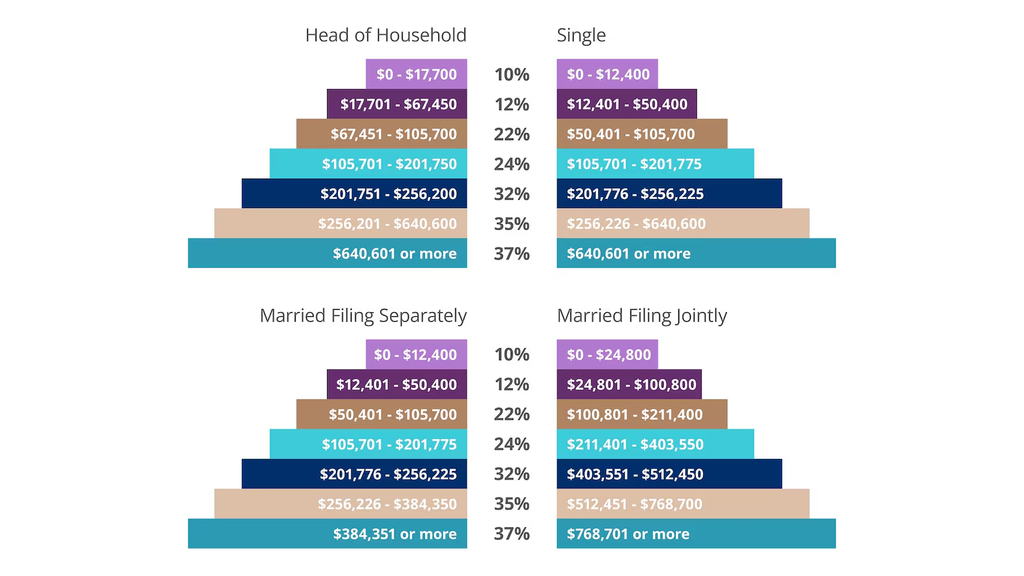
This effect rears its head most when a widow/widower inherits their deceased spouse’s retirement accounts, injecting both spouses’ RMDs into a Single tax return.
It’s natural for a couple to think:
“I’ve got bad health, and I’ll die early. My spouse has good health; they’ll die late. I’ll model my death at 75, their death at 95.”
This decision has massive implications on retirement taxes. By assuming a short span of MFJ years and a long span of Single years, the optimal path would involve injecting extra income (e.g. Roth conversions) into the MFJ years=.
Side Effect 4: Withdrawal Sequencing
The rule of thumb for withdrawal sequencing is taxable first, then tax-deferred, then Roth. But there are plenty of exceptions.
When planning software makes exceptions to this order, it’s typically to smooth income across your tax brackets before RMDs kick in.
The “End of Plan” age directly impacts how your planning engine makes this recommendation. Especially if you decide to model your death in the near-term years.

Side Effect 5: Pension and Annuity Decisions
Pension and annuity decisions are all about “how long will you live?” Plain and simple. Dying at 70 vs. dying at 90 are likely to make “black and white” impacts for what to do with a pension.
I think annuities are oversold and rarely ideal, but when would they be a smart(er) decision? When you live a long life!
In summary, today, how you model your age at death is not just about running out of money. It affects taxes, Social Security, withdrawals, fixed income, and more.
Thank you for reading! Here are three quick notes for you:
First – If you enjoyed this article, join 1000’s of subscribers who read Jesse’s free weekly email, where he send you links to the smartest financial content I find online every week. 100% free, unsubscribe anytime.
Second – Jesse’s podcast “Personal Finance for Long-Term Investors” has grown ~10x over the past couple years, now helping ~20,000 people per month. Tune in and check it out.
Last – Jesse works full-time for a fiduciary wealth management firm in Upstate NY. Jesse and his colleagues help families solve the expensive problems he writes and podcasts about. Schedule a free call with Jesse to see if you’re a good fit for his practice.
We’ll talk to you soon!
LOVE this content right here. GREAT job Jesse.
There are a couple other unintended side effects of over projecting your lifespan.
1) Safe withdrawl rate. The amount of people that blindly subscribe to a 30 year retirement with a 4% withdrawl rate and call it a day baffle me. Yes, the trinity study was AWESOME and I don’t want to under value it….but life is more nuanced. First, there are other investments than JUST the sp500 and 10 year treasury notes. Second, there is social security as you laid out, there are spending adjustments in down markets (yet, rarely do REAL people spend more in up markets…quality problem though), there are non financial options (go back to work or find a fun side hustle if money gets tight in the early retirement) and then there is our friend SORR.
Here is the thing…everyone is super comfy projecting living to 95 when they are 65…yet so few look at the odds. For singles, a 65 year old AVERAGE male…life expectancy of 82, female, 85, joint life expectancy, 91. So what an extra 4 years…could be more than you think honestly. Unless your have above average health and a strong family history…be careful.
2) You cut spending early in retirement when you WOULD have enjoyed it most. I dont know many 95 year olds flynig to Europe or redoing the kitchen. Yes, some expenses get higher (medical insurane premiums)…but it mostly gets a little cheaper in late retirement vs. early….but early retirement is when you have the most options for enjoying your money.
3.) Gifting. If you think your going to need your money far later in life, you’ll be less likely to depart with it to loved ones or causes you believe in (or yourself)….causing more to go to the governemnt. The federal gift rate is what…19-20k tax free. You hit 75…start giving it away. To what end….to the end that your kids and grand kids will get FAR more use out of it than you will and you there to make sure it is used as you wanted them to use it. I want to see my kids pay down the mortgage or celebrate them hitting netwroth milestones and feeling more secure, not be dead and then they get the money and whisper quietly “thanks dad” lol. Also…not that I suggest anyone AIM to go to a medicaid supported nursing home….but, if that is a potential option….then its best you give it away now because its claimed by the state (if that manuever fits into your values that is). Its hard to time physical decline and the 5 year look back periods.
4) What WOULD really happen if you ran out of money at 90? Honestly….I challenge you to figure it out. Would still have some SSI, may qualify for income adjusted housing or property tax breaks, food benefits or medicaid, would have to cut travel and liesure (you were likely not doing a lot of that anyway), may be able to sell the house and rent and live off the home sale, move in with kids and be closer to them at the end (all the MORE reason to gift them money earlier on….crack some jokes that you are prepaying rent, JUST KIDDING), take a roommate and live the golden girl lifestyle? Call me ignorant…but it is likely for most (NOT ALL)…1) you’ll never run out because you’ll cut spending in down markets and as funds deplete and 2) even IF you did….thats not game over.
Really good thoughts Will! Much appreciated.
“Life should not be a journey to the grave with the intention of arriving safely in a pretty and well preserved body, but rather to skid in broadside in a cloud of smoke, thoroughly used up, totally worn out, and loudly proclaiming ‘Wow! What a Ride!’”
-Hunter S Thompson
…same goes for your net worth as your body. In MY opinion, at least.
The unintended effect on Roth conversions is particularly interesting. A longer planning horizon might protect against running out of money, but it can also push software towards tax decisions that wouldn’t make sense under a shorter lifespan. Running several scenarios seems far more useful than relying on one assumed age.
A word, probably “impact”, is missing in the first sentence:
…a “small” decision creates much bigger than we assumed.
Great post. Treating the end-of-plan age as a real assumption with side effects, rather than a box you fill in once, is a point that rarely gets made.
I’d add one thing from the actuarial side: the “average person” in a life table doesn’t exist. Everyone ages at their own pace, which is why people born in the same year can differ a lot in biological age.
Life tables and the Gompertz-Makeham law are excellent at describing populations. They tell you how mortality rises with age across a cohort, but not where you sit within that cohort. The gap between biological and chronological age does. It shows your aging trajectory, and the changes that build up over decades tend to show by pre-retirement age, when they are strong predictors of chronic disease and mortality risk.
The uncertainty doesn’t go away, but it becomes a different kind of question. You can keep monitoring biological age and adjust your planning horizon as new data comes in, rather than locking in “90 for me, 95 for my spouse.” You can also act on it, because lifestyle changes can shift the trajectory. This applies to generally healthy people. Anyone with an existing diagnosis needs a different conversation.
For planning, this adds the variable that’s usually missing: health. Most of us already carry a sensor that has been passively recording our activity for years. That history is enough to estimate the pace of aging fairly well and to track how it changes, so the end-of-plan age can be updated over time instead of guessed once.
— Evgeny Yakushev, actuary / Life & Health Metrics