Don’t miss an episode of our podcast, Personal Finance for Long-Term Investors. Available on all podcast players.
Here’s the latest episode:
We’ve all spent money in dumb ways. But why?
“You just didn’t think through your purchase.”
Right. Thanks. I get that.
…but what do I learn for next time? That I should…think more?
I want to provide a better answer. So I dug into it.
I recently appeared on Chris Hill’s Money Unplugged podcast, and I shared my story about purchasing a hot tub. The story, in short…
- In 2017, I went on an awesome trip with close friends. We went to a snowy house in the mountains. The house had a hot tub that acted as the social mecca for the weekend.
- I returned from the mountains to suburban Rochester and concluded, “I need a hot tub.”
- I followed through… spent way too much... and regretted the purchase quite quickly.
I needed better answers.
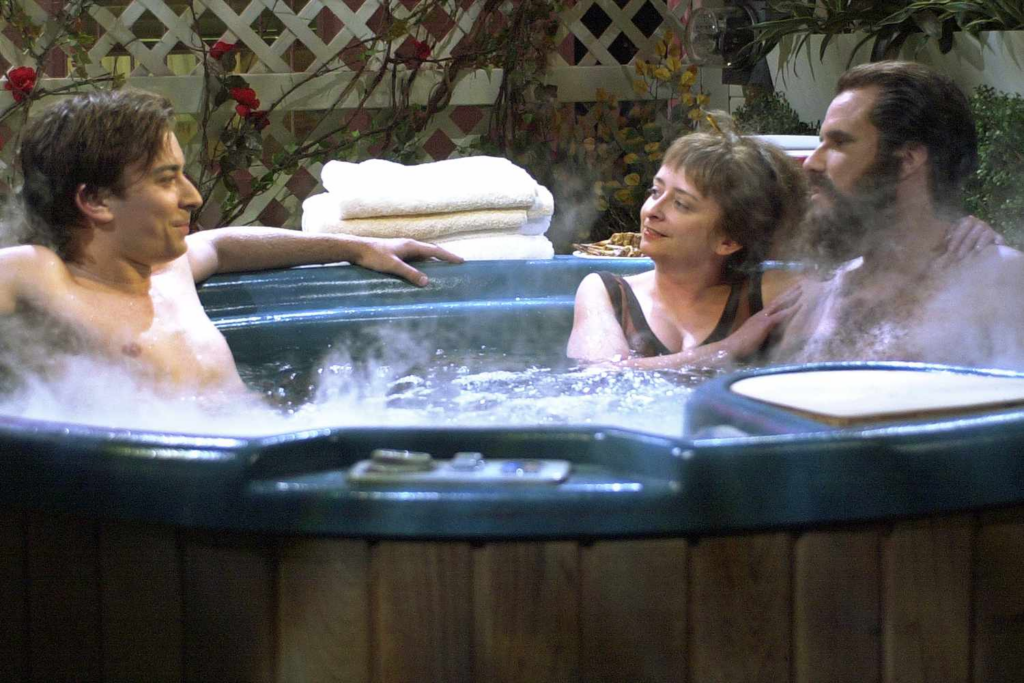
Why did I regret it?
Where did my failure occur?
What didn’t I think through that purchase?
I needed to understand the faulty mental models that lead normal people to make regrettable purchases.
The “Full Price” of a Product
It’s important we start with the “full price” of a product.
One of economist Gary Becker’s lasting ideas is that the “full price” for anything combines the direct monetary price and the indirect opportunity cost of the time required to consume it or produce it.
In the business world, they call this “asset utilization.” It’s not just about how much that new assembly line costs. It’s about how efficiently the company uses it going forward.
A new tennis racket might cost $200. But that racket only has value if you then use your time to play tennis.
I wasn’t just buying an $11,000 hot tub. I was pre-allocating my future time. The full price of my hot tub involved hours and hours of sitting in it. Which, of course, is the point of owning a hot tub.
But if you spend those hours in the hot tub, you’re not writing blog posts or recording podcasts or working with clients. You’re not doing chores around the house. You’re not putting the kids to bed. You’re eliminating other opportunities.
When I bought that hot tub, I wasn’t thinking about full price. I was only thinking about sticker price. I bet most people are similar in many of their purchases.
The Diderot Effect and Maintenance Burden
The hot tub required a new, concrete pad to sit on. I built one. Then I had to run special electricity to it for extra power. It needed chemicals and water testing strips and weekly maintenance.
The Diderot effect describes where buying one item triggers a chain reaction of further (sometimes unnecessary) purchases.
Yes, the Diderot effect exists for daily items. Your new, sleek smartphone “needs” an equally protectice and attractive case. But the Diderot effect really kicks in for big-ticket items.
One of our friends recently bought a nice boat. Which means…
- They need a boat trailer
- And a tow package/hitch on their truck
- They need a marina slip during summer and dry storage during winter
- Lots of maintenance.
- …and safety gear.
- …and gizmos, and gadgets, and toys.
- Annual insurance, too.
- And don’t forget the new nautical wardrobe. After all – what’s worse than cruising up to a flotilla wearing a bunch of land gear?
The Diderot effect means that a boat is not “just” a boat.
Life Energy
“Life energy” belongs here too. Vicki Robin and Joe Dominguez created the “life energy” idea in their seminal book, Your Money or Your Life.
Life energy is “your finite allotment of time and physical or mental vitality on Earth.”
How will you spend it?
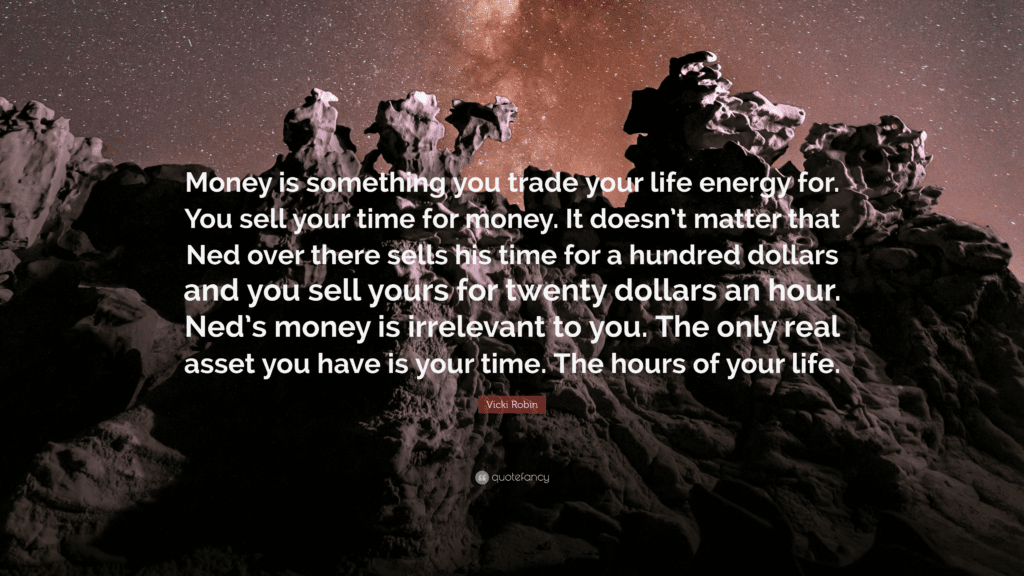
Please – do not think that spending your life energy is bad. Quite the contrary! Your life energy is being spent – day by day – whether you like it or not!
The point is that we must be deliberate with how we spend that life energy. We need to choose. And sometimes those choices are hard. There are many forces in this world who’d love to persuade (or coerce) you toward alternative ways to spend your life energy.
Will you listen to them? Will you be coerced?
There’s nothing wrong with spending your life energy sitting in a hot tub. But you must accept that finite life energy has now been spent.
Part of Gary Becker’s “full price” idea is that today’s purchases pre-commit future life energy to the purchase. What good is buying that boat unless you spend future life energy on it?
Sunk Costs in Modern Life
Today’s ideas explain the double-edged nature of abundant life.
People get more money. We’re inundated with infinite ways of spending that money. But our time remains finite, single-use only.
When an object requires your ongoing time to be worth owning, your life energy flows to that object indefinitely. Otherwise, the object becomes dead weight (and a source of guilt).
Every round of golf you play means less time to train for the half-marathon.
Every Netflix binge means less time to work through the beautiful cookbook.

Every choice you make has a full price. Whether you’re aware of it or not.
Money is renewable. Time is not.
We cannot simply ask, “can I afford it?”
We must instead ask, “will I build the time into my life to use this?”
Thank you for reading! Here are three quick notes for you:
First – If you enjoyed this article, join 1000’s of subscribers who read Jesse’s free weekly email, where he send you links to the smartest financial content I find online every week. 100% free, unsubscribe anytime.
Second – Jesse’s podcast “Personal Finance for Long-Term Investors” has grown ~10x over the past couple years, now helping ~20,000 people per month. Tune in and check it out.
Last – Jesse works full-time for a fiduciary wealth management firm in Upstate NY. Jesse and his colleagues help families solve the expensive problems he writes and podcasts about. Schedule a free call with Jesse to see if you’re a good fit for his practice.
We’ll talk to you soon!
Thank you for the blog post! I’ve seen this play out a few times, once with a family who owned a vacation home. They very much enjoyed using it, but they also spend an enormous amount of time and money maintaining both houses. Sometimes, they feel like they would have preferred staying at hotels and seeing more places.
On the limited life energy topic, have you read Four Thousand Weeks by Oliver Burkeman? It’s one of my favorites, like Your Money Or Your Life, on how to think about our limited run on this planet.
Great comments Zachariah. And thanks for the book recommendation. I don’t need more books in my house, but….. 😉
Good post.
One additional cost I put on myself (self imposed) is resale time. Listing my used junk at a later date on marketplace. Why…I could just donate it, I don’t need the rogue $10 here and there.
It makes clutter more expensive. The more money I have, the less of a “big deal” spending $50, $100, a few grand on the latest desire is. But as you pointed out…the bigger the do-dad….the time/effort/extra costs get added on.
So, I have to now ask myself, if this item isn’t 100% used up like an old t-shirt, $5 kitchen container or food, but anything that could concievable end of on a shelf in my garage or basement, I ask….”do I want to deal with the hassel of selling it later”.
It helps me un-desire many little things.
As an older retired person, I’ve certainly done my share of not considering the whole price. But, I would add that life isn’t just about work and productivity. Marathon training isn’t inherently better than a round of golf. Maybe the hot tub isn’t for you. But, small short rituals like a hot tub soak (or Netflix) with our partner after the kids are in bed can be vital, reenergizing, and memorable. Don’t overthink it and continually stop yourself from trying new things. Sometimes you end up enjoying the price (like I did with boating) or the price goes down after learning the ropes. But you won’t know until you try.
Life is about choices. Recognizing what truly makes it meaningful for each of us is the challenge we all face. As I pass thru my final years I understand how important that concept is and try to help my children grasp this. We only go through life once (maybe) so make the most of it.